
A Decade of Digital Monster Hunting in the Real World
For three decades, the allure of 'catching 'em all' has driven Pokémon enthusiasts, a pursuit that has consistently encouraged engagement beyond the confines of a screen. Originating on Nintendo's portable Game Boy in 1996, the franchise has seamlessly transitioned to modern mobile platforms, finding renewed success with the augmented reality game, Pokémon Go. Now commemorating its tenth anniversary, the mobile application leverages GPS and augmented reality technology, allowing players to discover and capture virtual creatures within their real-world surroundings.
Since its inception, Pokémon Go has been downloaded over a billion times across iOS and Android devices, maintaining a daily active user base in the millions. Michael Steranka, Vice President of Product at Scopely, the game's publisher, emphasizes that the core experience of Pokémon Go has always revolved around fostering community and connection among its players. "Pokémon Go will always start with community – we think we're only scratching the surface here," Steranka stated. He also shared anecdotes of players who met through the game and later invited the company to their weddings, highlighting the profound impact the game has had on their relationships.
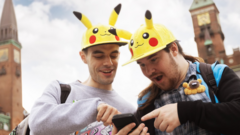
This sentiment of deep player connection was visibly demonstrated recently when hundreds of gamers convened in New York's Times Square to engage in a virtual battle against a giant Mewtwo, an homage to the game's original trailer from over a decade ago. This event underscored the enduring appeal and communal spirit that Pokémon Go has cultivated.
The Phenomenon of Augmented Reality Gaming
Upon its release in 2016, Pokémon Go rapidly achieved one of the most significant mobile game launches in history. The technology behind it overlays digital characters onto a live feed of the real world via a smartphone's camera, creating the illusion that these creatures exist in the player's immediate environment. This innovative approach sparked a global phenomenon, drawing people to public spaces like parks, waterfronts, and shopping centers in pursuit of Pokémon.
Matthew Reynolds, editor of the Pokémon news website One More Catch, explained, "By allowing you to take your mobile phone out into the world to discover virtual creatures, Pokémon Go helped realise the millennial dream of becoming a Pokémon Trainer." The game's sustained popularity is further evidenced by its hosting of major live events in more than 60 countries, attracting an average of over 400,000 attendees annually since the inaugural Go Fest in 2017.
Beyond the Screen: Community and Well-being
Scopely estimates that players have collectively traversed over 100 billion kilometers while engaging with Pokémon Go, a distance equivalent to approximately 334 round trips between Earth and the Sun. UK content creator j0beats, who manages one of Twitch's largest channels dedicated to the game, frequently travels to events like the one in New York to connect with fellow players. She observes, "People always think it's crazy that you travel all over just to catch some pixels. But it's not just about that. When you go to these big events, you're there for the people and for the energy of it." She likens the experience to a music festival, where the communal atmosphere enhances the enjoyment beyond simply consuming the content.
J0beats also recounted a personal highlight: the 2025 Pokémon Go Wild Area event in South Yorkshire, which was the sole European event that year and conveniently located near her home. This allowed her to collaborate with community ambassadors and contribute to hosting the event.
For some players, the game has also offered unexpected benefits for mental well-being. Austin, a player from Maine, USA, who has been playing since 2017, shared his experience of struggling with anxiety and depression prior to discovering Pokémon Go. He described his first raid meetup as transformative: "When I went to my first raid meetup it was like a warm blanket. As I held my phone and walked to the group of strangers in the park, I saw them look at me, and for the first time I wasn't nervous meeting this new group of people, I was actually excited and happy. From that day on that little voice telling me to stay in bed was put on mute."
Challenges and Future Outlook
Despite its successes, Pokémon Go has not been without its challenges. In its early days, the game's immense popularity sometimes led to safety concerns, with police and safety organizations issuing warnings about players becoming too engrossed and inadvertently putting themselves in danger. Connectivity issues were also prevalent, with servers often struggling under the strain of global demand. The COVID-19 pandemic, while generally beneficial for the video game industry, initially impacted Pokémon Go significantly due to widespread lockdowns, which limited outdoor activity. However, the game rebounded as restrictions eased and people sought reasons to venture outside again.
More recently, in 2025, questions arose among fans regarding the game's future trajectory when Scopely, owned by Saudi Arabia's Public Investment Fund, acquired developer Niantic for $3.5 billion. Steranka expressed optimism about this development, stating, "My hope is that we prove to players over time that this is definitively a good thing for the game and the community."
Looking ahead, Steranka reiterates that the primary focus for Pokémon Go remains on fostering community, creating lasting memories, and providing shared experiences for families. He reflected on the game's consistent presence in his own life: "No matter where I was and what phase of my life, Pokémon Go has been there for me. It meets people where they are, at whatever phase of life they're in."
Source: 10 years of Pokémon Go and the millions still trying to catch 'em all